
Hell Let Loose: Vietnam is basically the 2021 hit wearing a fresh jungle hat. Same huge battles, same obsession with roles and chain of command, same slow, deliberate pace — only now you’re slogging through Vietnam instead of World War II. When everything lines up, both with your squad and with the servers, it’s a genuinely great time. When it doesn’t, you’re staring at a crash screen or walking back to the fight for the third minute in a row. It’s fun at its core, sure, but it feels underdone, and that’s why it lands where it lands.
Hell Let Loose: Vietnam is a new multiplayer shooter where players fight in large-scale military warfare. Read our review to see what it did well, what it didn’t do well, and whether it’s worth buying.
What Is Hell Let Loose: Vietnam?
Hell Let Loose: Vietnam is a multiplayer action shooter built by Expression Games and published by Team17. It’s set during one of the most iconic conflicts in modern history, the Vietnam War, and it throws you into a 50v50 co-op battle where you fight as either the North Vietnamese Army or the US Armed Forces.
You get 6 big-scale maps, 17 distinct battle roles, a wide spread of weaponry, usable vehicles and transports, and a variety of game modes. In other words, it’s a full-blown war experience staged in the lush jungles and mountainous terrain of Vietnam, and almost none of it works unless people talk to each other.




To be blunt about the basics: it’s 50v50 multiplayer, it’s set in that 1950-1970 Vietnam window, it leans hard on teamwork, and it offers multiple roles and specialties plus different usable vehicles and transports. If you’ve never touched a game like this, think of it as a big game of capture the flag where you’re one very small, very replaceable part of a very large machine.
Why This Genre Still Hits Different
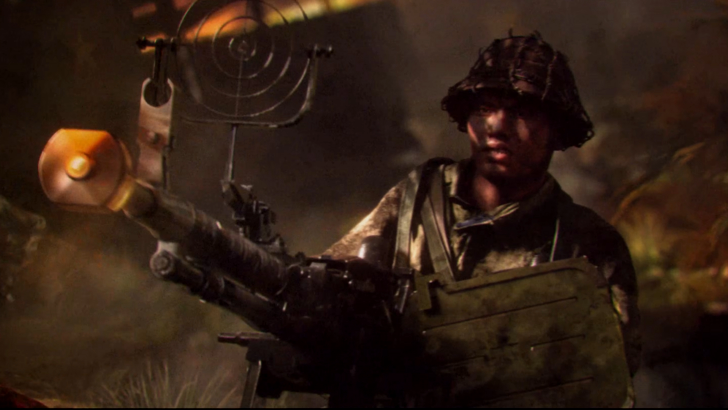
In 2026 there’s no shortage of multiplayer first-person shooters, and dig a little deeper and you’ll find even more sub-genres splitting them apart. You’ve got tac-shooters like Counter-Strike, hero shooters like Overwatch, arcadey competitive shooters like Call of Duty, extraction shooters like Marathon, and hardcore milsims like ARMA. But nothing, and I mean nothing, compares to the chaotic feel and massive scale of large-scale team-based shooters.
Battlefield might be the poster child for that sub-genre, but it’s changed its formula so much over the years that it barely qualifies anymore, especially with recent entries leaning into faster gunplay and an arcade-y vibe. I’d argue the truer representative is 2021’s surprise hit Hell Let Loose, which has just dropped its sequel.
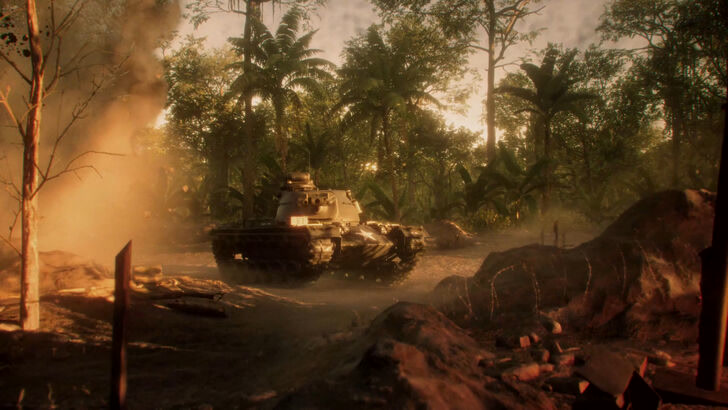
Hell Let Loose: Vietnam is a large-scale, squad-based 50 v 50 shooter set during the 1955-1975 Vietnam War between the US Armed Forces and the North Vietnamese Army. The thing that sets it apart from everything else in the genre is its role-based system for massive battles, where you and your squad have to coordinate with a Commander to actually control the map.
At its core it’s more Hell Let Loose: same 2021 gameplay, but with the spotlight on guerrilla warfare in dense jungles and open wastelands across different parts of Vietnam. The core is still fun, but there are noticeable issues and flaws across the experience that keep it from reaching a higher level. It’s definitely not a game for everyone, and a couple of matches are usually enough to tell if it’s your thing or not.
Bottom line: it’s got enough going for it to be a good time with the right squad, especially with friends, letting you lean into the large-scale battles, teamwork, and role-play potential. But it’s got some glaring problems across the board that make it feel less like a proper sequel and more like a re-skin.
Teamwork and Role Play Make the Dream Work
The gameplay loop is simple. Two teams of 50 go at it across different maps, capturing key points and winning either by having the higher score when time runs out or by taking the enemy’s headquarters, depending on the mode. So at its core, it’s not that different from any other big squad-based shooter.
But that’s where the role-based Chain of Command system comes in and changes everything.
Teams break into smaller squads: Infantry, Armor, Recon, Mortar, and Helicopter (if you’re playing as the US). Each squad has specialized roles for every player, with Infantry members able to serve as Riflemen, Medics, Specialists, Engineers, Machinegunners, and more.
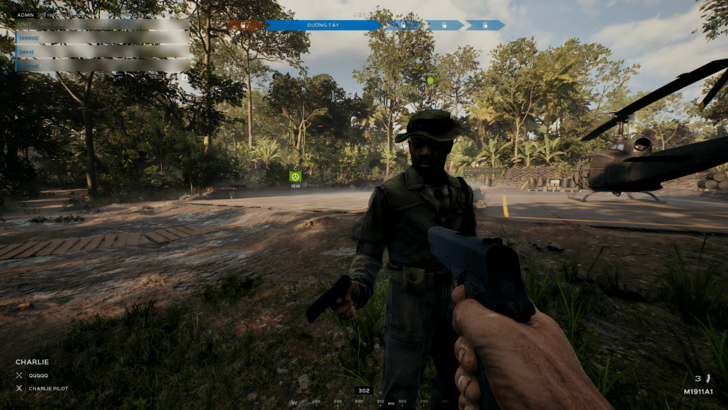
Some roles are easy to wrap your head around. Riflemen are your standard infantry for straightforward gunfights. Engineers build Resource Nodes, Barricades, and Resupply Stations in friendly territory to supply the team, reinforce areas, and repair friendly vehicles. Squad Leaders can construct Garrisons and Outposts, which act as temporary respawn points for their squads.
But those roles are nothing compared to the team’s Commander.
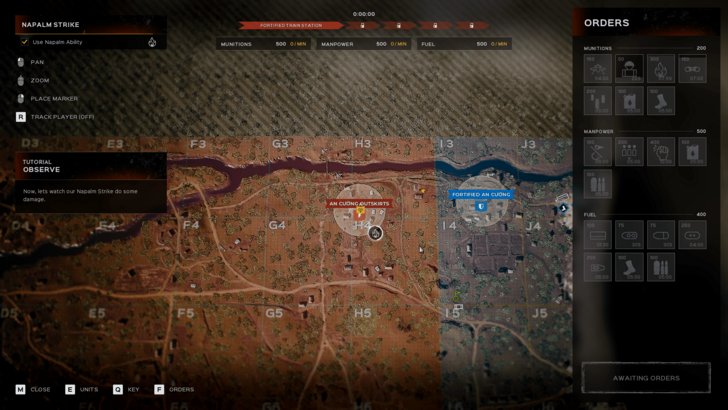
The Commander is the team’s one and only strategist. They call the shots, pinging squads onto specific objectives and using what I like to call superpowers: calling in recon planes for intel, ordering artillery strikes to take specific points, or dropping supply reinforcements for troops on the front lines. They are, without question, the biggest factor in how each match plays out, since they can swing a whole battlefield with the right orders.
Here’s the catch. This only works if every team actually does their job. The game isn’t designed as a one-person show. You can go rogue and rack up kills, but if the numbers aren’t on your side, you’ll never take a point. And since it only takes 2-3 shots to kill someone, trying to play it like Call of Duty or even Battlefield is a recipe for frustration.
The game gets way more memorable when you get into character and lean into your role. Some of my best moments came from playing as a Spotter on the two-man Recon squad, basically handling the busywork of marking enemies with binoculars and setting up mobile spawn points for the squad and the team.
One time, the random Sniper I was paired with and I dug in on a hilltop overlooking a crucial control point our team absolutely needed or we’d lose the match. With me calling out targets and my partner landing incredible shots, we shut down a counter-attack and racked up about 9 confirmed kills from that single position. We even ran out of ammo and had to basically beg our Commander for supplies. I’m not saying we single-handedly won the game, but I like to think we made the play that swung it.
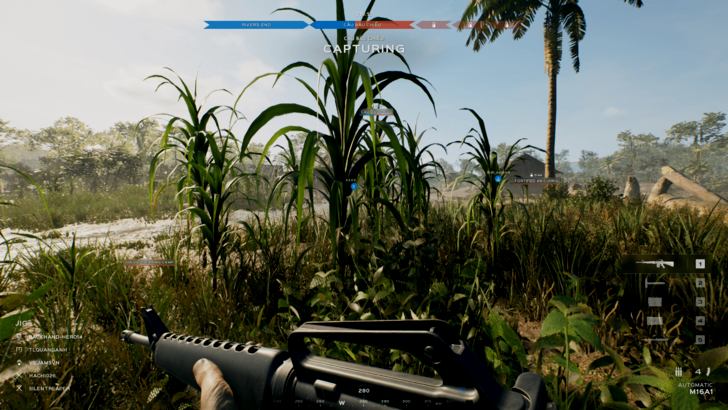
I found the whole loop pretty fun, and the learning curve of figuring out your role and getting used to the slower pace is a nice change of pace in itself. The role-playing potential is a huge boost too, since players have the freedom to genuinely stay in character. Honestly, that’s what makes this kind of large-scale multiplayer more memorable than pretty much any other shooter out there.
Gunplay, Progression, Match Flow, and Other Annoyances

Satisfying gunplay matters in any first-person shooter, and unfortunately that’s where this game falls short. The starter guns, the M16A1 for the US and the Type 56 for the NVA, are strong. Actually, way too strong. The recoil on both is super easy to control, and since you only need 2-3 hits to kill, firefights end up feeling pretty mindless.
Vietnam’s jungle terrain naturally pushes fights into close-range encounters, and with guerrilla warfare in the mix, opponents just camp in bushes and shoot anything that moves. You could argue that’s historically accurate, since both sides used forest cover to win skirmishes. The problem is that in a video game it’s genuinely frustrating to play against, and the game doesn’t give you any feedback on where you got shot from, so you’re left scrambling to find the enemy just to fight back.
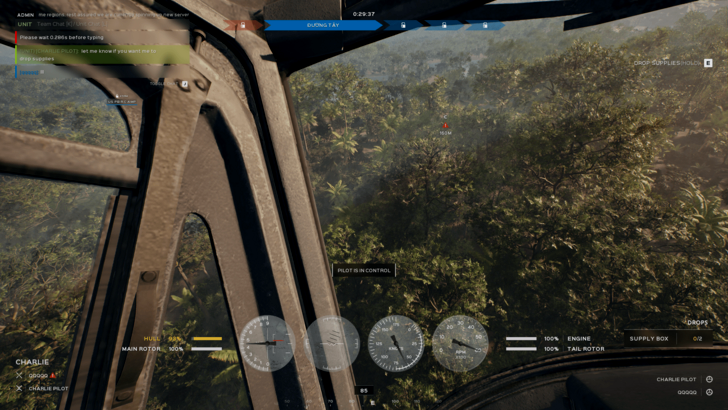
The easy fix would be to report it to your Commander and hope they send an Armor team with a tank, or call in recon planes and artillery strikes to flush enemies out. Here’s the catch: those abilities aren’t available right from the start, since teams need to stockpile resources and supplies before a Commander can actually deploy their superpowers.
Then there’s controller aim-assist. Ever since cross-play became a thing, aim-assist in any PvP shooter has been one of the most divisive topics in design, and here it’s noticeably strong. Combine that with guns that are already easy to control and it gets really tough to deal with. I know what you’re thinking: why don’t you just turn off cross-play? I would if I could. All servers force it on. And no, buying a controller isn’t a real solution either, since not every PC player has one lying around and that’s just fighting fire with fire.
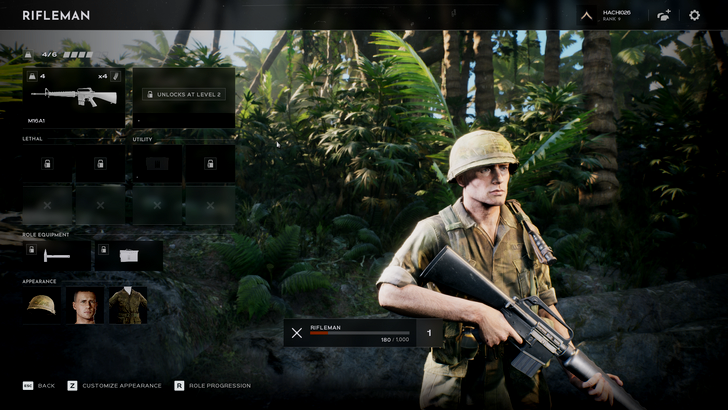
Which brings us to progression. It’s not unreasonable that it takes a while to level up a class and unlock new gear, or in this case new weapons. But since the starter weapons are already so strong on both sides, there’s barely any reason to ever swap them out. There’s no real benefit to using a submachine gun even though close-range fights are the norm, because the starter rifles work just as well if not better. That totally undermines the progression system, since other than unlocking extra grenades and utility items for Riflemen, you don’t have much incentive to level anything up.
Stack all those gunplay issues on top of each other and matches start feeling like a slog. Respawn timers scale based on how much action is happening in an area, so you’re stuck waiting if you want to jump straight into the fight. On the flip side, you might end up spawning way across the map from the objective you’re supposed to be fighting over, which means a long walk back just to get into the action. It’s easy to write that off as a skill issue, since Commanders and Squad Leaders set up spawn points, but it still stinks to run all the way back or sit through a long timer just for it to happen again. Nobody enjoys that.
There are a few straightforward fixes for some of these problems, and I’m sure the devs are already working on balancing them out. Either way, these hit the core experience and directly impact the game’s overall design.
Optimization Could Be Better
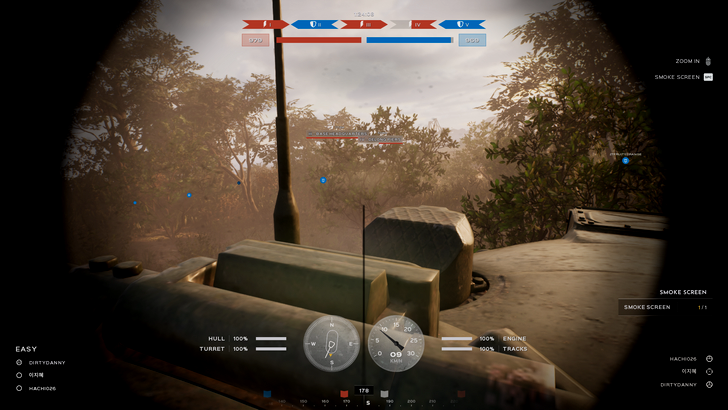
Large-scale multiplayer games tend to have mixed results when it comes to performance and server optimization, and Hell Let Loose: Vietnam is no exception. It took some tweaking on my end, especially since there were frame drops and graphical glitches at launch. Running a mid-level rig with an RTX 3070, I managed to hold a steady 60 fps on Medium to High settings with DLSS enabled. That’s not the ideal setup, since some folks would rather crank the graphics higher, but it seemed to cut down on stutters and visual artifacts.
That doesn’t make it okay, though, because the game still crashes pretty much at random. Worse, those crashes aren’t easily diagnosable, since the error reports don’t always tell you what actually went wrong. Hopefully the devs track down a fix soon, because even if the crashes aren’t as frequent as during the early betas, they’re still happening often enough to be annoying.
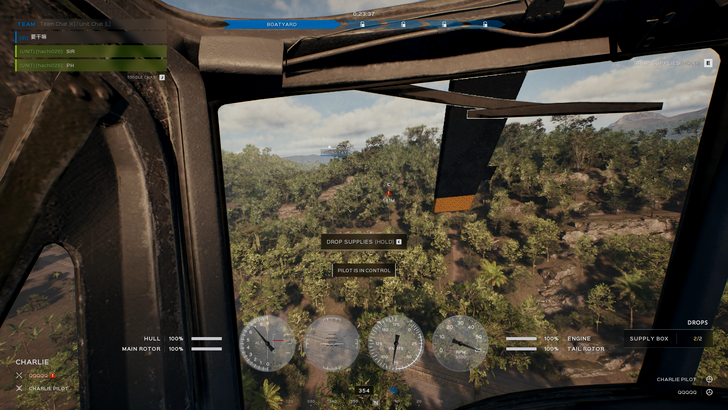
The Server Browser and general load times are another problem. Joining a server can take a minute, and sometimes it won’t even let you in unless you’re a VIP. For context, servers hold a few spots for VIP players who are part of specific clans and community servers. That’s more of a minor annoyance than the performance stuff, since you can usually just hop into a different server, and the devs have already said they’re looking into it.
As for load times, they might be tied to the game forcing cross-play, and I’ll give credit where it’s due: even servers with pretty high ping still feel playable and relatively smooth. If that’s the trade-off for a solid connection, the load times are worth it, at least for me.
Is Hell Let Loose Vietnam Worth It?
Wait for a Sale or More Content Updates

Hell Let Loose: Vietnam is fun at its core, and with the right group, especially friends, it can deliver some of the best moments in the genre if you’re willing to really invest yourself. Given how quickly the devs have been rolling out fixes, there’s reason to believe it’ll keep improving over time. Even so, I can’t recommend picking it up right now, because it doesn’t feel like enough of an upgrade over the previous game.
Fans of large-scale FPS games will have a blast regardless, but newcomers might bounce off the design and the deliberate slow pace. One thing I will say: this game is best played with a mic. If you’re not the type to communicate in games like this, you probably won’t have as much fun as I did.
Is There Single-Player Content in Hell Let Loose: Vietnam?
No. The game is primarily a multiplayer experience with a lengthy single-player tutorial to get players up to speed on the mechanics.
What are the System Requirements to Play Hell Let Loose Vietnam on Steam?
The System Requirements as listed on Steam are as follows:




The price is wrong?
Final Verdict
Hell Let Loose: Vietnam delivers a below average experience with a score of 62/100.