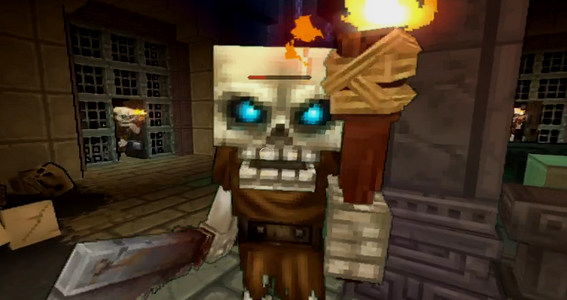
Dungeon Settlers is a real-time strategy RPG and colony management simulator set in a ruined world, and its Early Access build is already impressive even though it’s only two floors deep. You dig into it expecting a tidy little dungeon crawler, and instead you get a game that keeps piling on systems until your brain hurts in the best possible way. Here’s what it does well, what it doesn’t, and whether it’s worth trying.
What’s Dungeon Settlers About?
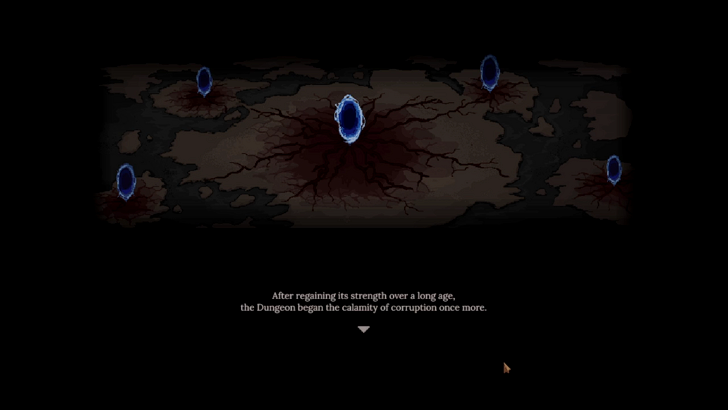
Dungeon Settlers follows an expedition party trying to reach the bottom of a dangerous dungeon, which houses the source of the corruption currently taking over a desolate world. As the expedition faces new challenges, floors, and enemies, its ranks keep growing with fresh faces and members, all bringing their swords and spells to the table to revitalize the world and destroy the dungeon core.
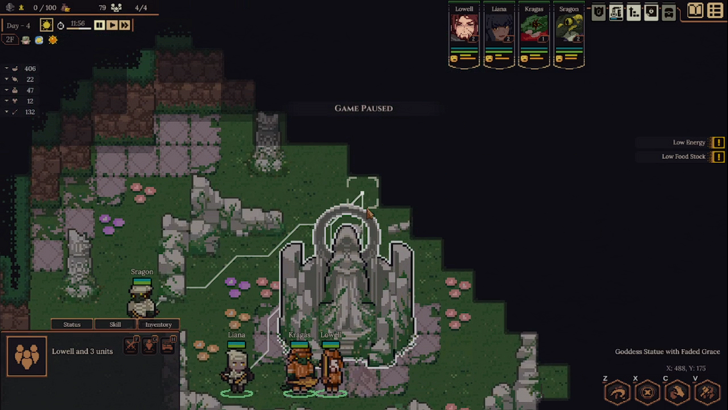
The gameplay revolves around its real-time combat system, which forces you to think on your feet about skill activations, basic attacks, and positioning. There’s a tactical pause feature that lets you queue up commands for each party member to execute once combat kicks back in. That ties into the colony management layer too, which you can only access when you’re not running a dungeon expedition.
With building mechanics covering efficiency ratings, quality scores, room sizes, decoration points, and multiple material tiers, Dungeon Settlers has you constantly weighing whether your colony can thrive while the dungeon threat looms ever closer.
As for when you can play it, Dungeon Settlers was released in Early Access on September 4, 2026, at 4:00 A.M. ET / 1:00 A.M. PT for PC via Steam.

The Dungeon Core Beckons!
If you know anything about isekai, whether it’s anime, manga, or manhwa, you’ll recognize the trope of a protagonist being weirdly overpowered at one specific thing. Usually it’s an RPG, and they’re usually some kind of prodigy with its mechanics, to the point where they get whisked away to another world because of it.
I bring this up because Dungeon Settlers has all the ingredients for that kind of game in its theming, presentation, and strategic depth. It’s got the expanding layers some min-maxing player could lose themselves in, but that’d probably scare off casuals. It’s got tier-based progression and character variety that would fit right into an isekai plot if someone actually got transported to a different world.
Most importantly, though, it’s got the no-nonsense grit of dungeon crawling that would hook any RPG or strategy player, regardless of whether they know isekai. This dungeon’s only two floors deep right now, but there’s plenty to explore and even more to dig into.
Saving the World, One Crawl at a Time
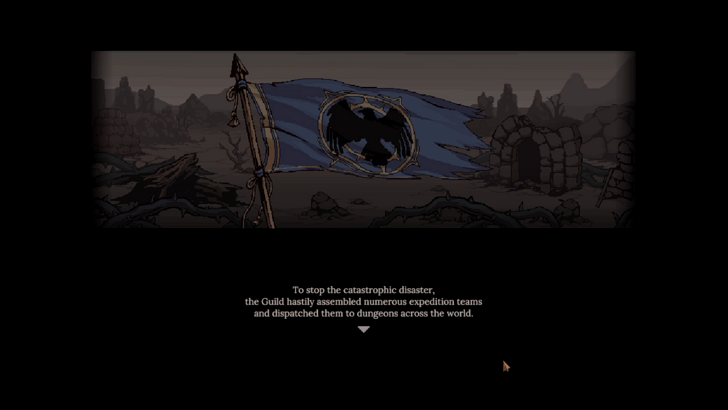
Despite my isekai-heavy intro, Dungeon Settlers’ story is a completely in-universe affair about a dying world and a scrappy crew doing their best to bring it back to life. You oversee a forward expedition party settling in around and trying to conquer a dungeon accessible through a surface portal. Individual party members might not make it, but the expeditions keep going, and the line of hopefuls ready to fight for a better world just keeps growing. And so it goes.
The dungeon’s got five floors, each one ending with a powerful guardian. The guild sponsoring these expeditions can only set up outposts inside the dungeon once each guardian is beaten, so the party has to keep throwing themselves at these milestones and pushing toward the dungeon’s core.
I’ll just say outright that this story is far from finished. Right now it’s only the prologue and the first two floors for the EA release. The devs have already teased the rest of the floors plus extra special dungeons down the line, but I don’t need to wait for those to point out what works and what doesn’t, such as it is.
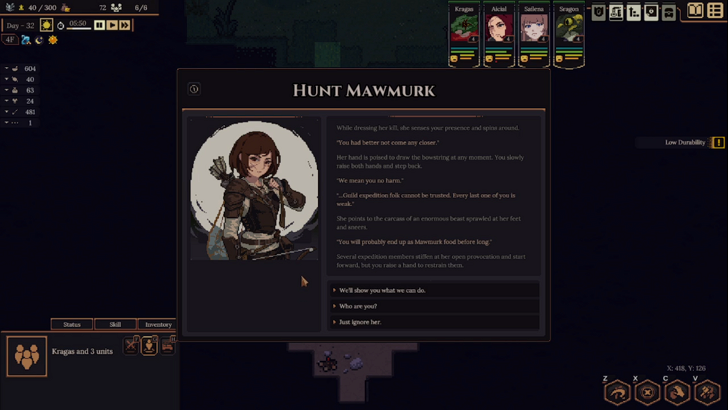
First up, the world-building. Dungeon Settlers starts strong with its grand scope and a solid amount of background lore for The Guild and the different races populating the world. There are also plenty of side missions alongside the floor-clearing to keep the narrative momentum going, so the stakes never really fade into the background.
That said, my second criticism is way less forgiving, and it’s all about the game’s characters and characterization. Dungeon Settlers borrows a page from Darkest Dungeon: instead of a fixed party of named heroes, you control an endless caravan of hopefuls meant to die and get replaced. That worked for Darkest Dungeon, but it’s only passable here for one specific reason: the NPCs and bosses actually have personality.
Darkest Dungeon makes up for the nameless main party by giving each member strong characterization beyond just mechanical differences, and its NPCs are just as memorable. The Provisioner, the Mastery Trainer, the Survivalist, every one of them is as iconic to players as the bosses they eventually face in the dungeon, like the Swine Lord, the Prophet, or even the Collector.
Dungeon Settlers is almost completely nameless across the board, aside from a handful of story NPCs tucked into side missions. It doesn’t really feel like a tight story about a group of friends struggling together yet, just faces and hands doing things to serve some grand purpose. That said, I expect that’ll improve somewhat by 1.0. The fact that bosses are one-time stat checks doesn’t help either, since there’s no real reason to remember them after you win.
Real-Time Dungeon Crawling Was the Way to Go
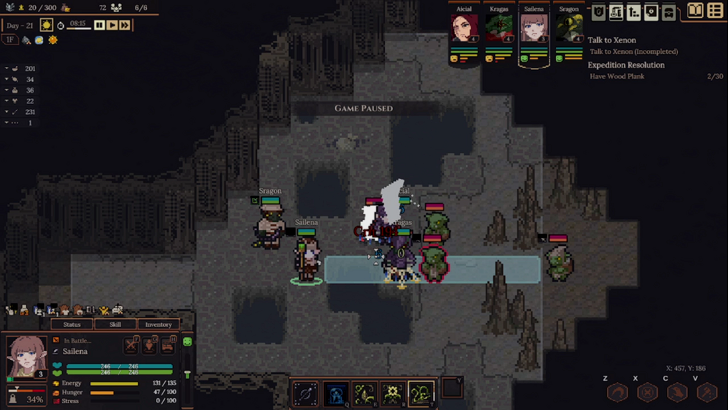
Let’s get into the meat of Dungeon Settlers now: the game’s main hook, real-time strategic dungeon combat. Dungeon crawling as a mechanic pairs naturally with turn-based combat. Whether it’s TTRPGs or traditional RPGs, it just makes tactical sense to have all your options in front of you on your turn and let your opponent do the same in a chess-like exchange. Dungeon Settlers pulls off that same satisfaction differently, though, because everything happens in real time, and you’ve gotta bark out orders while previous ones are still executing.
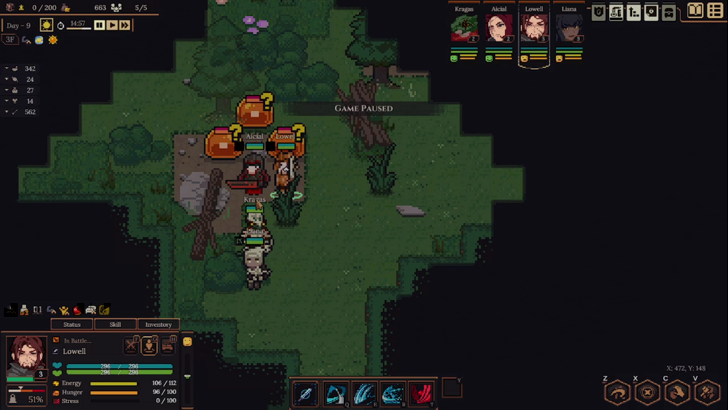
The combat is a positional, grid-based, real-time strategic exercise that demands quick reactions to enemy attacks and careful cooldown management. You can pause at any time to queue up orders that’ll play out once time resumes. And it’s not just for combat. Dungeon travel through hazards and resource gathering, including deciding what to prioritize, all work through the same mechanics.
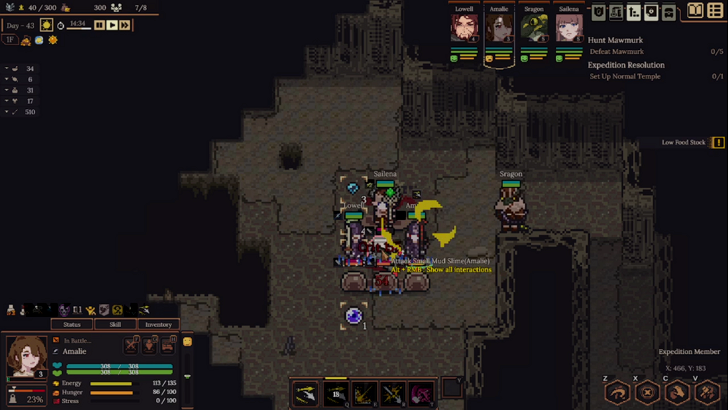
What sets Dungeon Settlers apart from other real-time strategy dungeon crawlers is, first and foremost, just how rare that combination actually is. Off the top of my head, only Legends of Grimrock and Torchlight II come to mind, setting aside MMOs. Among those, Dungeon Settlers stands out by focusing more on grid-based positioning and smart target prioritization over raw numbers or stacking status effects, though it has both of those too.
The game also uses a randomized roster of party members instead of pre-set character progressions, so there are tons of variables in play, and no two campaigns ever play out the same.
What I love about this is that it means combat rarely devolves into two stat walls just trading blows. It always ends up being a dynamic dance of different strategies. It also helps that survival matters just as much as combat in dungeon crawling, and the two are woven together tightly enough to create a satisfying closed loop.
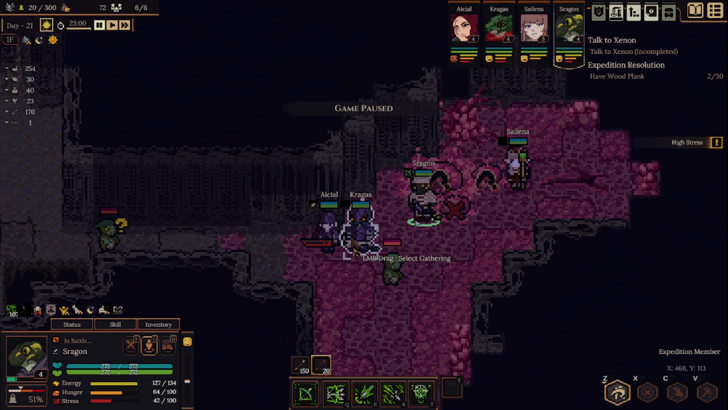
Party members get tired and hungry naturally, or from combat, so they’ve gotta camp out in the dungeon just like TTRPG characters in games like D&D or Pathfinder. They might also need to camp to recover their mood, repair gear, or craft more ammo, and doing so almost always leaves them open to nighttime raids.
This push and pull of trying not to die and trying to survive keeps even the quiet moments engaging, and the downtime between big encounters feels just as essential to the experience. See, players don’t know when a dungeon floor ends, and once you commit to entering the next one, there’s no backing out for any reason. One bad fight, one extra piece of food eaten, or one step too far, and that party’s gone for good. There’s even an Iron Man mode, so save scumming isn’t an option.
If I gotta find a flaw in the combat, it has nothing to do with the core system. The real-time combat is a killer idea; it’s what’s packed into it that I question. The characters themselves feel a tad too random, and the tools you have to tip the dice in your favor are way too limited. Starting stats are random, as are weapon proficiencies, levels, species, and traits. After that, level-up traits are also random, adjustable only by spending more resources, and even then nothing’s guaranteed. Rimworld at least lets you develop your colonists in a direction after the initial randomness.
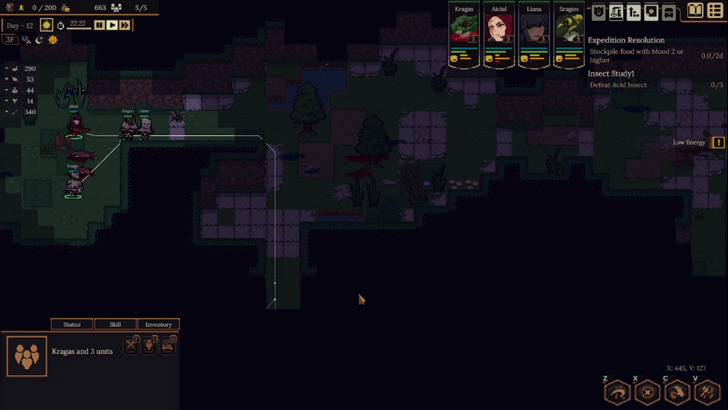
I get the appeal of making the most of what you’re dealt, but a bit more player agency and a touch less randomness, even as a later-game upgrade, would be exactly what this game needs to feel like a true web of strategic decisions under each player’s control.
Now, all that strategy isn’t confined to the dungeon. Nope, if you ever do manage to find your way out, more management awaits in the form of your very own Rimworld-style, top-down colony.
The Colony Keeps the Gears Turning
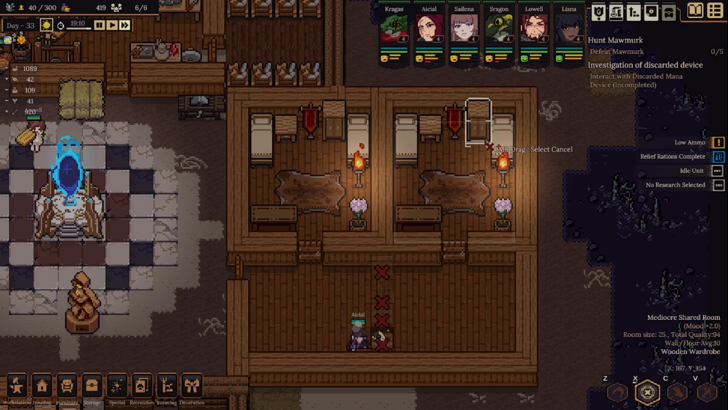
Expeditions take time, and there’s no guarantee you’ll reach the bottom. That’s why you’ve gotta build and manage a settlement around the topside dungeon portal, so you can launch more expeditions, recover from previous ones, and generally boost your odds with better gear and fresh recruits.
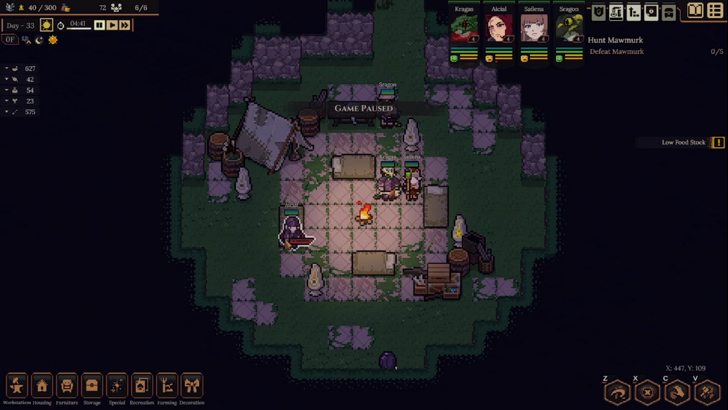
This is Dungeon Settlers’ other half of the experience: full-on colony management sim next to a yawning portal. Anything you build inside the dungeon is pretty basic compared to what you can throw down up here. Farms, rooms, entire guild halls, the settlement borders are the limit, and even those can expand over time.
The settlement layer starts simple, like the combat and dungeon crawling, but it quickly spirals into something almost overwhelming as more and more systems pile onto your plate. You start with basic sleeping bags on the ground, but eventually you’re juggling overlapping systems to give your squad the best shot at conquering the dungeon.
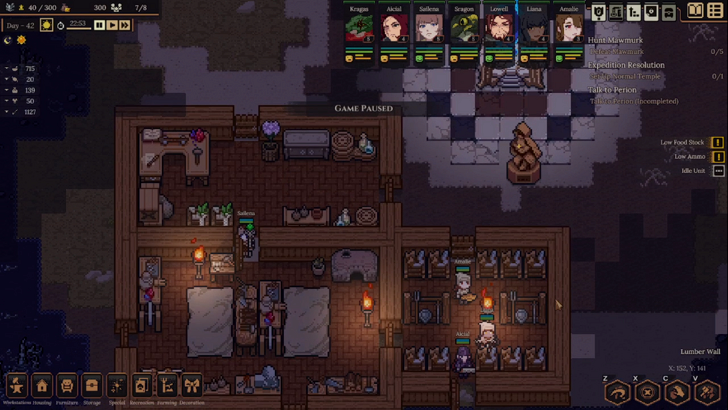
We’re talking room bonuses for mood, which is a strict set of criteria covering room size, average floor and wall quality, decor points, and included workstations; crafting speed for workstations; storage filtering; research; workstation accessibility; special dungeon-locked workstation requirements; and even visibility and bonuses for being near fires.
It’s a whole mountain of stuff to keep track of, and that’s not even counting the fact that party members get tired and hungry at the settlement too, and that the settlement keeps running while you’re off on a dungeon crawl. Translation: bringing the colony’s entire food supply on a run is probably gonna leave you with a few dead adventurers when you get back.
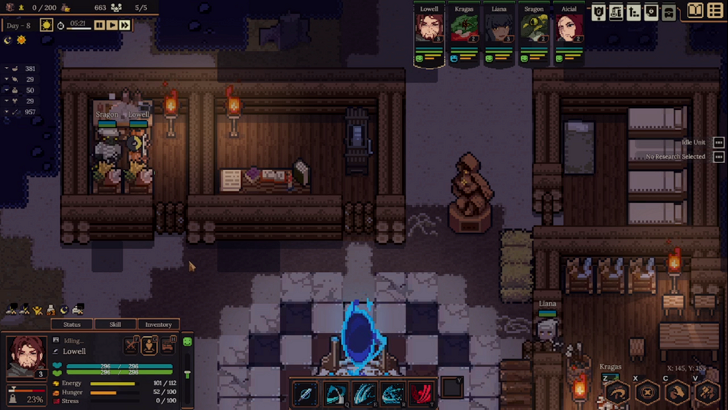
This much is a treat for me, despite the insane amount of stress and overthinking I had to do to keep everything afloat. It’s part of the charm, honestly, and far from impossible if you’re willing to put in the work.
My favorite part of the settlement layer is how tightly it’s woven into the dungeon crawl system, and vice versa. It’s obvious from the start that players were never meant to hole up in the settlement for long, and that the dungeon should be a relatively quick trip if the main goal is ever gonna be reached.
Food, especially early on, can only be found in the dungeon, never farmed. Same goes for construction materials and research currency; they all come from dungeon loot. If you never left, you’d never have a base beyond a hovel. If all you do is dungeon crawl, you’d be dead by day three.
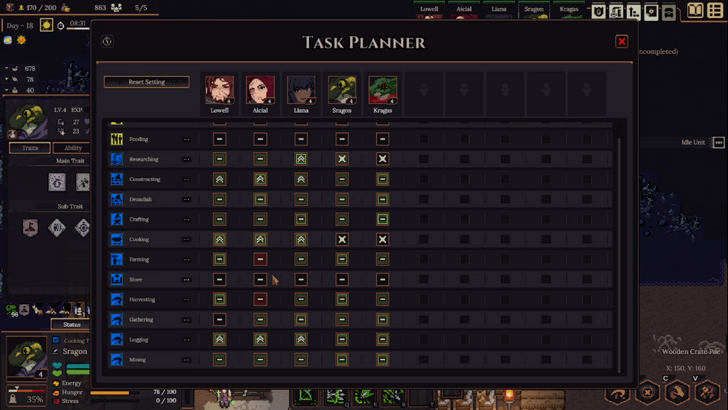
It’s a great, balanced cycle that repeats itself seamlessly and layers on new complexity as fresh variables enter the picture. More party members, new resources, more recipes, and better bonuses make the next dungeon run smoother, which means more loot. Then the cycle kicks off all over again.
That said, even though it’s intuitive and honestly pretty forgiving for the most part, there are moments when the game forgets it’s a game and cranks the difficulty to a hundred. For good reason, mind you, but no less overwhelming for it.
It Can Be Unclear at Times
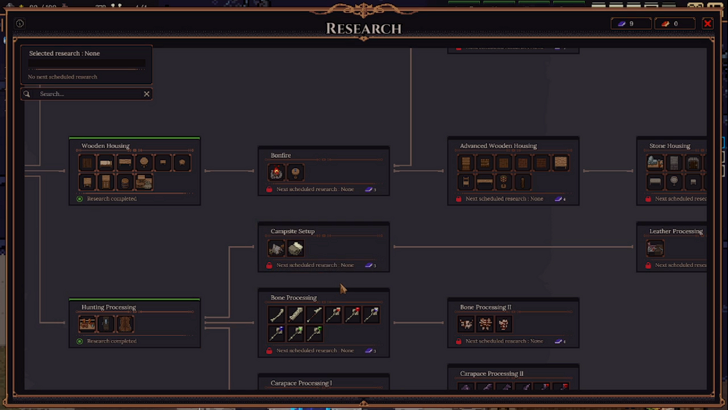
Among all its moving parts, Dungeon Settlers’ archive of instructions, tutorials, and game knowledge is the one thing that can’t keep up as new systems pile on. Whether it’s clunky translations that use terms found nowhere else except that one entry, or tiny tooltips buried under layers of nested windows, there are moments where the game’s complexity feels more confusing than intriguing.
To be clear, most of the game’s ins and outs are accessible through its built-in encyclopedia, which even has a search function, and anything highlighted has a tooltip that can be frozen if it contains other tooltips inside it. My gripe is that the quality of the content in both isn’t consistent.
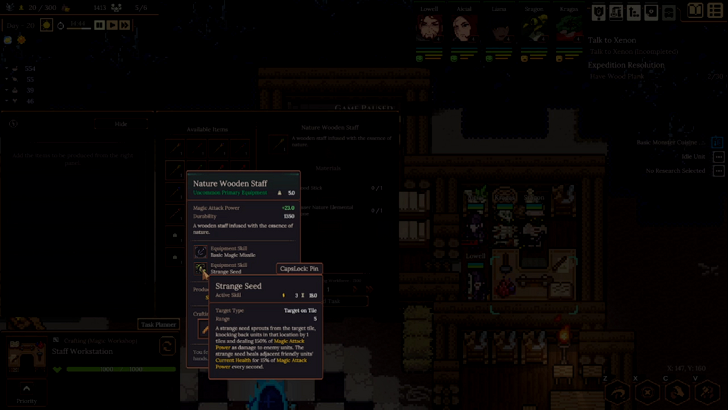
Bad translations and possible pre-release jargon are just the surface-level issue, with the key word in what I said earlier being “most.” Yeah, some tooltips are just straight-up missing, wrong, or confusing, like the description for the Dining Room bonus.
It’s the kind of early-access quality-of-life stuff you’d expect from something that’s literally not finished yet, but the devs need to get on top of it fast. With this many systems in play, even a tiny bit of vagueness is all it takes to start unraveling the whole experience.
The Bottom Line: Consider This Crawler Hooked!
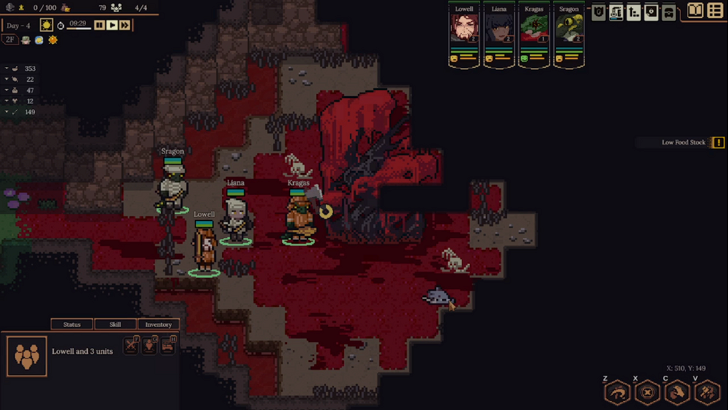
And so we’ve reached the end of Dungeon Settlers, or at least the end of its first couple of floors. The game is very early in its Early Access life, which you can tell from the inconsistent tutorial material and the fact that only two of the five total floors are even playable. It’s not a bad thing exactly, but it’s obvious this game’s got a long road ahead before full release, and I don’t just mean content-wise.
Some polish is absolutely needed, because some of the issues I ran into were baked into the game’s core systems and overall player experience. Piling more stuff on top without fixing those things will only drag the whole game down.
That said, these first two floors were impressive. There wasn’t a single moment where my strategic brain checked out, and the mental exhaustion after every session always felt earned, like a hard day’s work. I’m excited to see what the other floors have in store, but I can wait for the game to smooth out its rough edges first.